Lochaber
The most-visited region of mainland Highland Scotland — Fort William, Glencoe, Ben Nevis, the Glenfinnan Viaduct, Mallaig, the road to the isles, Knoydart, Ardnamurchan.
Plan your visit
Three of Scotland's flagship long-distance routes (West Highland Way, Great Glen Way, Caledonia Way) terminate or pass through Fort William, and the Mallaig ferry connects the mainland to Skye and the Small Isles.
Lochaber is the historic Highland district that runs from Glencoe in the south to Glenfinnan in the west and Spean Bridge in the north, with Fort William at its heart. It is the most-visited region of mainland Highland Scotland — Glencoe alone draws something close to a million visitors a year — and concentrates more iconic landscape per square mile than any other corner of the country.
Getting there
By road from Glasgow on the A82 through Loch Lomond, over Rannoch Moor and down through Glencoe into Fort William (about 2.5 hours). From Inverness via the A82 down the Great Glen along Loch Ness (1.5 hours). By rail: the West Highland Line from Glasgow Queen Street to Fort William (3.75 hours), with the scenic Mallaig extension continuing beyond. By ferry: Mallaig is the mainland gateway for Skye (to Armadale) and the Small Isles.
When to go
Year-round, with serious seasonal variation. Fort William is busy from late March through to October half-term; Glencoe is busy year-round, especially in winter for the climbing and ski seasons. The Glenfinnan Viaduct and the Jacobite steam train run April–October — book both the train and Glenfinnan parking ahead in summer. Ben Nevis is a straightforward summer hill walk but a serious mountaineering objective in winter.
Destinations
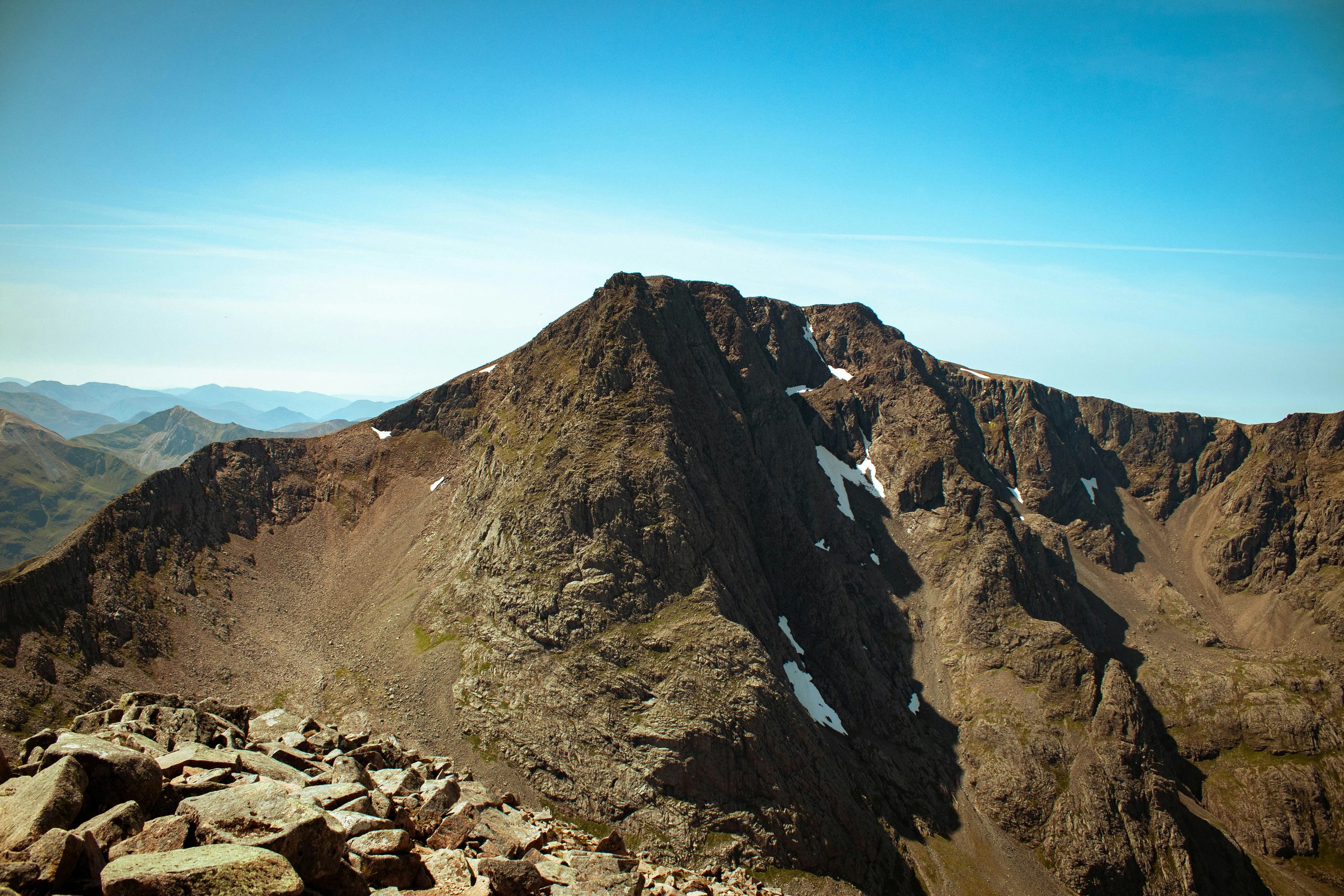
- Ben Nevis The highest mountain in the British Isles. Ben Nevis (1,345m) rises above Glen Nevis on the south side of Fort William; the Mountain Track up its west flank carries close to 100,000 walkers a year, while the CMD Arête and the North Face are the preserve of committed hill-folk.
- Glencoe The dramatic glen south of Fort William, framed by the Three Sisters and Bidean nam Bian to the south and the Aonach Eagach ridge to the north. Famous for its mountains, the 1692 massacre, the NTS visitor centre at its foot, with Scotland's oldest ski resort at its head.
- Loch Ness The 23-mile freshwater loch running south-west from Inverness through the Great Glen to Fort Augustus. By volume the largest body of fresh water in the British Isles, world-famous for the legend, and a working stretch of the Caledonian Canal between the east and west coasts.
Trails through this region
- route · hiking Ben Nevis via the Càrn Mòr Dearg Arête The classic mountaineering route on Ben Nevis — over Càrn Mòr Dearg (1,220 m) and along the airy connecting arête to the summit. 17.9 km, 1,500+ m ascent, 10–13 hours, Grade 1 scramble. The finest way to climb Ben Nevis for fit walkers comfortable with exposure.
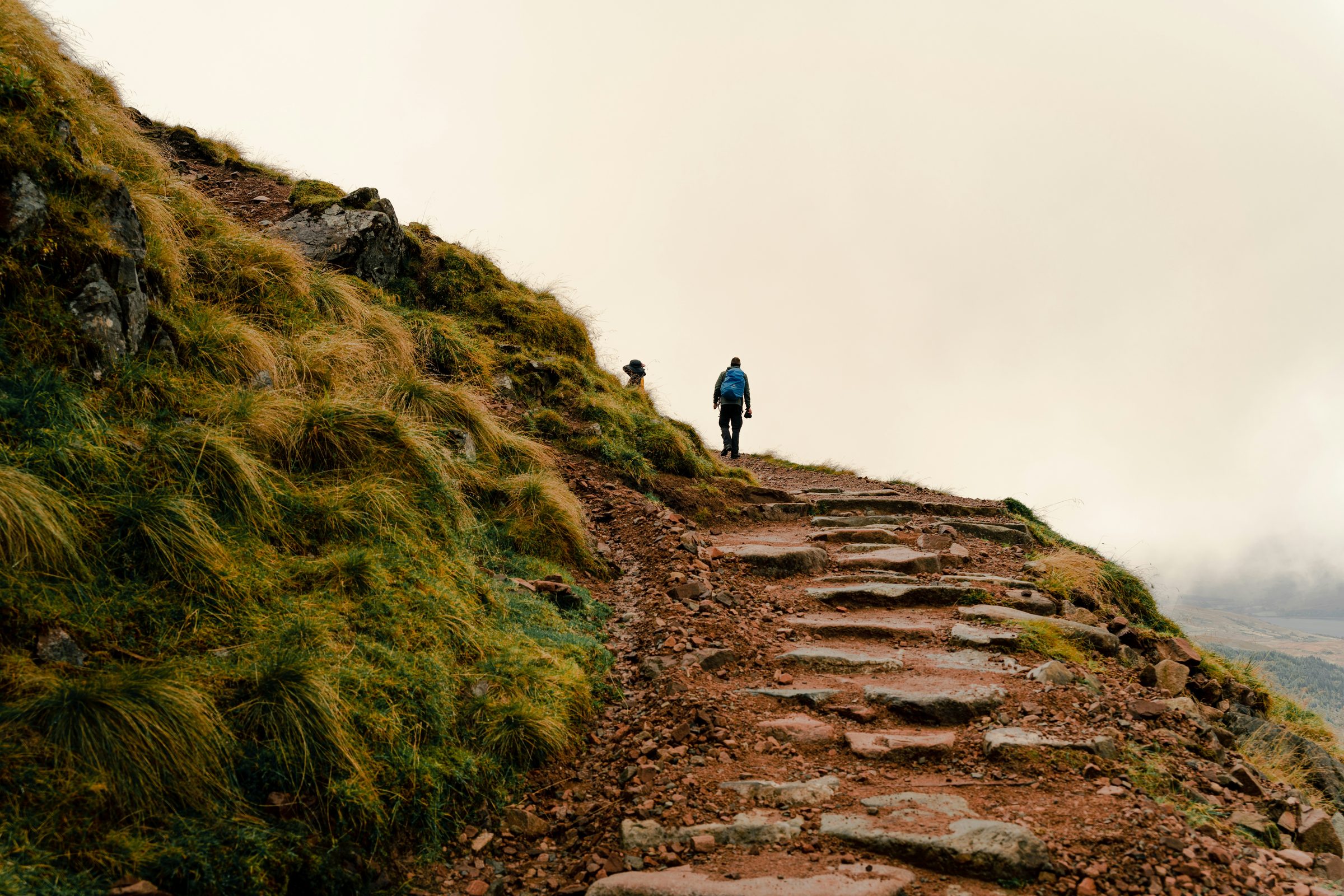
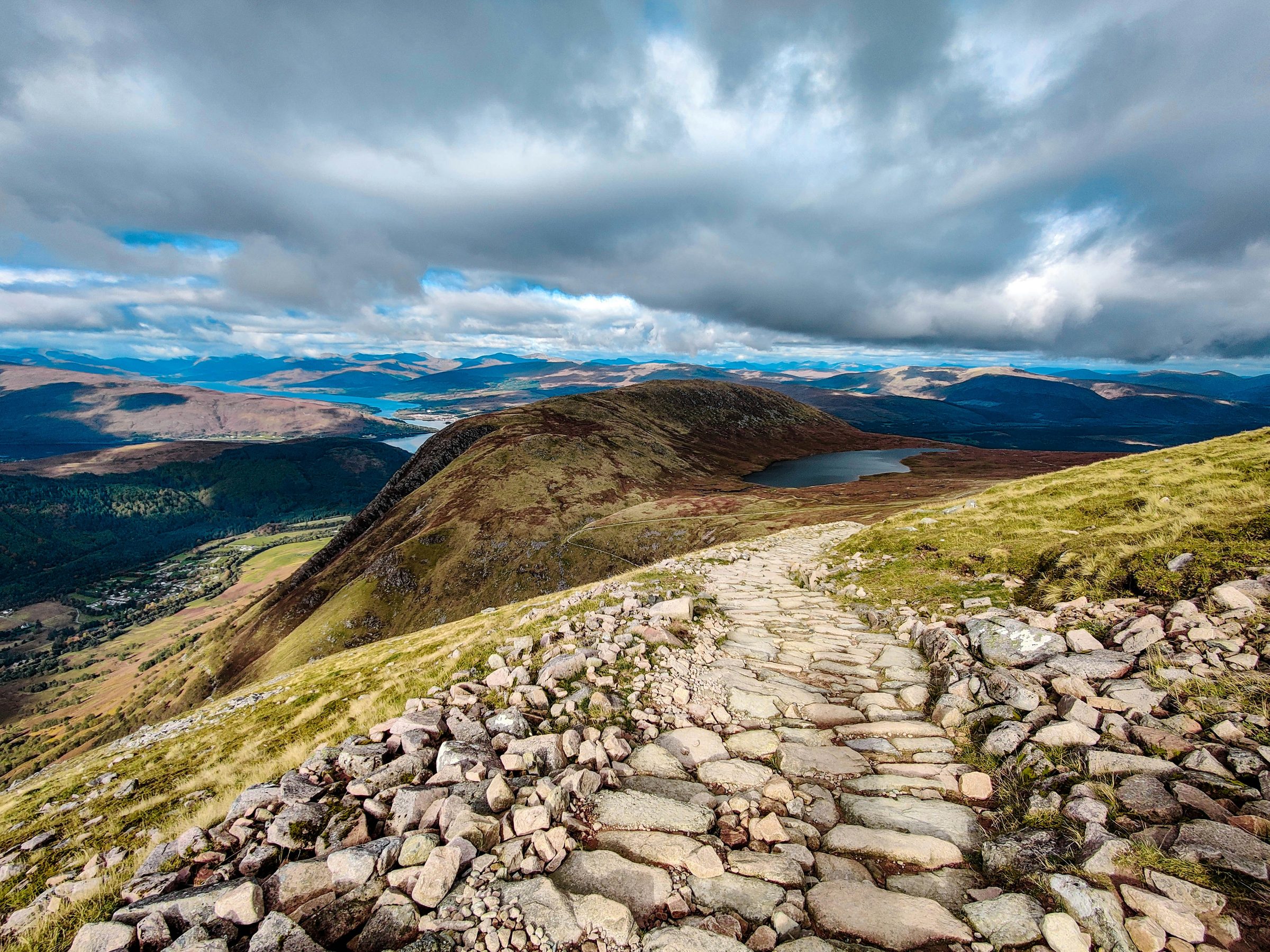
- route · hiking · walking Ben Nevis Mountain Track The standard route up Ben Nevis — the well-engineered late-Victorian path from Glen Nevis Visitor Centre to the summit. 17 km return, 1,352 m of ascent, 7–9 hours. Tough rather than technical; the difficulty is the cumulative climb on tired feet.
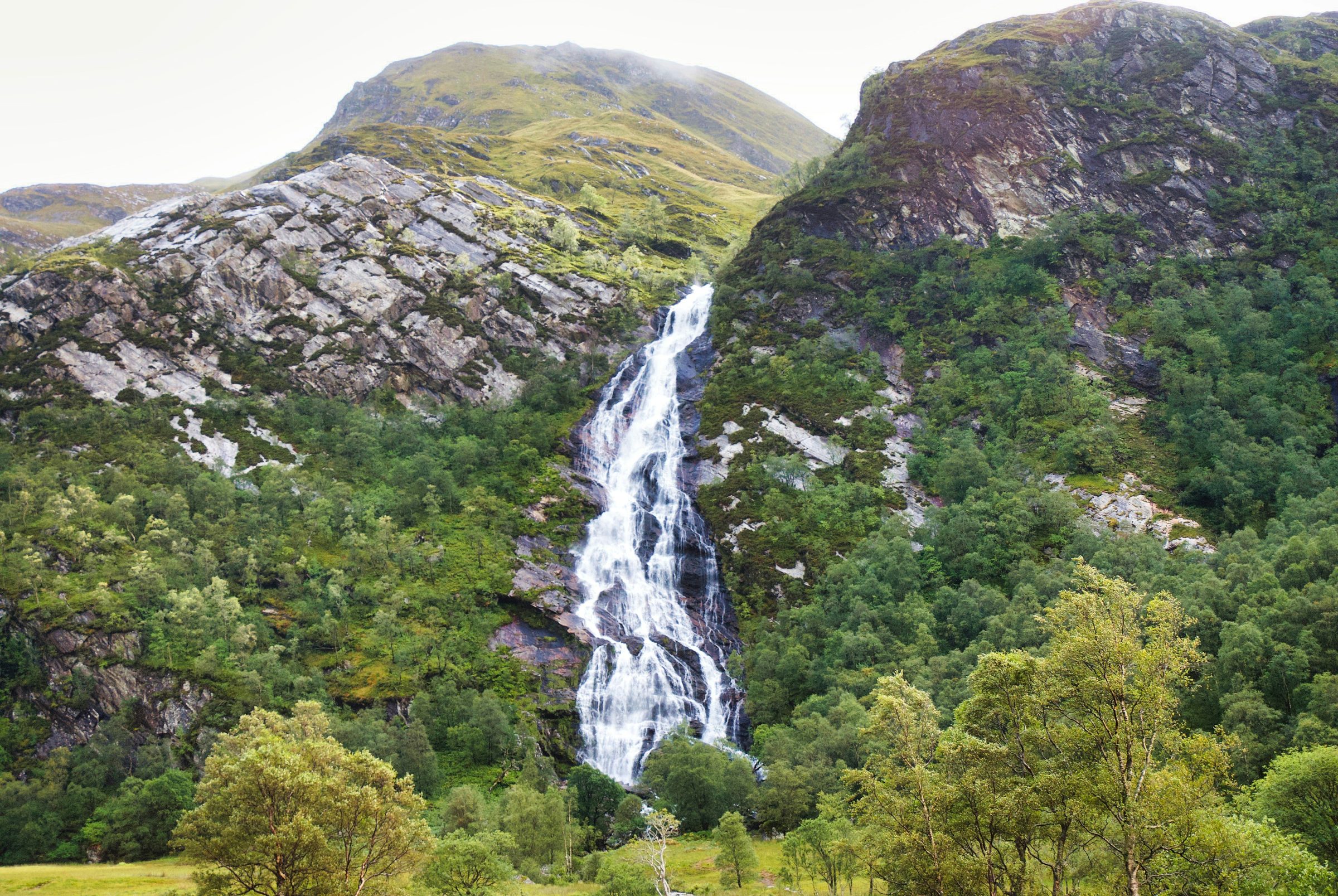
- route · walking Steall Falls and the Nevis Gorge The classic Glen Nevis gorge walk — through the Nevis Gorge to the meadow below An Steall Bàn, Britain's second-highest waterfall (~120 m). 5 km, 1.5–2 hours, moderate. The wire bridge across the river Nevis is famously vertiginous (and entirely optional).
- route-collection · hiking · walking Ben Nevis The UK's highest mountain (1,345 m), and the short walks of the Glen Nevis gorge below it. Three routes from one hub — the Mountain Track from Glen Nevis Visitor Centre, the Càrn Mòr Dearg Arête for scramblers, and the moderate Steall Falls walk through the Nevis gorge.
- route · cycling The Caledonia Way Sustrans's flagship Scottish cycle route — NCR 78. 234 miles from Inverness south through the Great Glen to Fort William, west through Glencoe to Oban, then on through Argyll and Kintyre to Campbeltown. Tarmac throughout, on cycle path and quiet roads.
- route · hiking · cycling Great Glen Way The geological-fault-line walk and cycle from Fort William to Inverness — 79 miles along the Caledonian Canal and the shores of Loch Lochy, Loch Oich, and Loch Ness. Easier ground than the West Highland Way; canal towpath and low-level forest tracks throughout.
- route · hiking · walking West Highland Way Scotland's most-walked long-distance trail — Milngavie on the northern edge of Glasgow to Fort William, 96 miles through Loch Lomond, Rannoch Moor, and Glencoe. The standard introduction to long-distance walking in Scotland and the busiest of the Great Trails by some margin.
Plan your trip
Take the printed map with you.
Full-colour, OS-grade fold-out maps cover Scotland region by region — free where you travel, the same ones you've found at ferry ports and visitor centres for over 20 years.
Fort William (An Gearasdan) is the regional capital, sitting at the southern end of the Caledonian Canal where the Great Glen meets Loch Linnhe. It’s the start or finish of the West Highland Way, the Great Glen Way, and the Caledonia Way; the base camp for Ben Nevis (1,345 m, the UK’s highest summit, climbed by something approaching 100,000 walkers a year on the standard tourist path); and the rail terminus of the West Highland Line from Glasgow Queen Street, which over the Mallaig extension is one of the great scenic train rides in the world.
Glencoe village and the surrounding glen — Loch Achtriochtan, the Three Sisters, Buachaille Etive Mòr, the Devil’s Staircase — sit 25 km south of Fort William on the A82. The glen has an identity all of its own — the visitor centre, the Clachaig Inn, the Glencoe Mountain ski resort, the Lost Valley walk and the 1692 massacre interpretive signage are all here.
West and south-west, the road to the isles runs from Fort William through Glenfinnan (the Jacobite steam train viaduct, the Loch Shiel monument), Arisaig (the white-shell beaches, the silver sands), and on to Mallaig where the Caledonian Macbrayne ferry crosses to Armadale on Skye, plus services to the Small Isles (Eigg, Muck, Rum, Canna) and Knoydart (the foot-passenger-only ferry to Inverie).
Knoydart itself — the Rough Bounds peninsula reachable only by ferry from Mallaig or by a 16-mile hike from Kinloch Hourn — is a place apart from the rest of Lochaber, with no road in and some of the emptiest country in the Highlands. Same goes for Ardnamurchan, the long peninsula south-west of Loch Sunart with Britain’s most westerly mainland point at Ardnamurchan Lighthouse.
Good to know
- Ben Nevis (1,345 m) is the highest mountain in the British Isles.
- Glencoe alone draws close to a million visitors a year.
- The Glenfinnan Viaduct carries the Jacobite steam train, famous from the Harry Potter films.
Frequently asked questions
How hard is it to climb Ben Nevis?
The standard Mountain Track from Glen Nevis is a straightforward but long day hike in summer, around 7–9 hours return. In winter it becomes a serious mountaineering route requiring an ice axe, crampons and navigation skills.
How do I see the Glenfinnan Viaduct and the Jacobite train?
The viaduct is a short walk from the Glenfinnan visitor centre on the A830 west of Fort William. The Jacobite steam train runs April–October and crosses the viaduct; book both the train and Glenfinnan parking ahead in summer.
What's the best way to reach Skye from Lochaber?
From Mallaig, at the end of the Road to the Isles, CalMac sails to Armadale on Skye. Mallaig is also the ferry gateway to the Small Isles and to Knoydart.