Sutherland
The wild north-west quarter of the Scottish mainland — Lochinver, Suilven, Cape Wrath, Smoo Cave, Durness.
Plan your visit
The lowest population density of any administrative area in the British Isles; the iconic empty-quarter stretch of the NC500 and the long-haul cycling and walking objective for everyone heading further than Inverness.
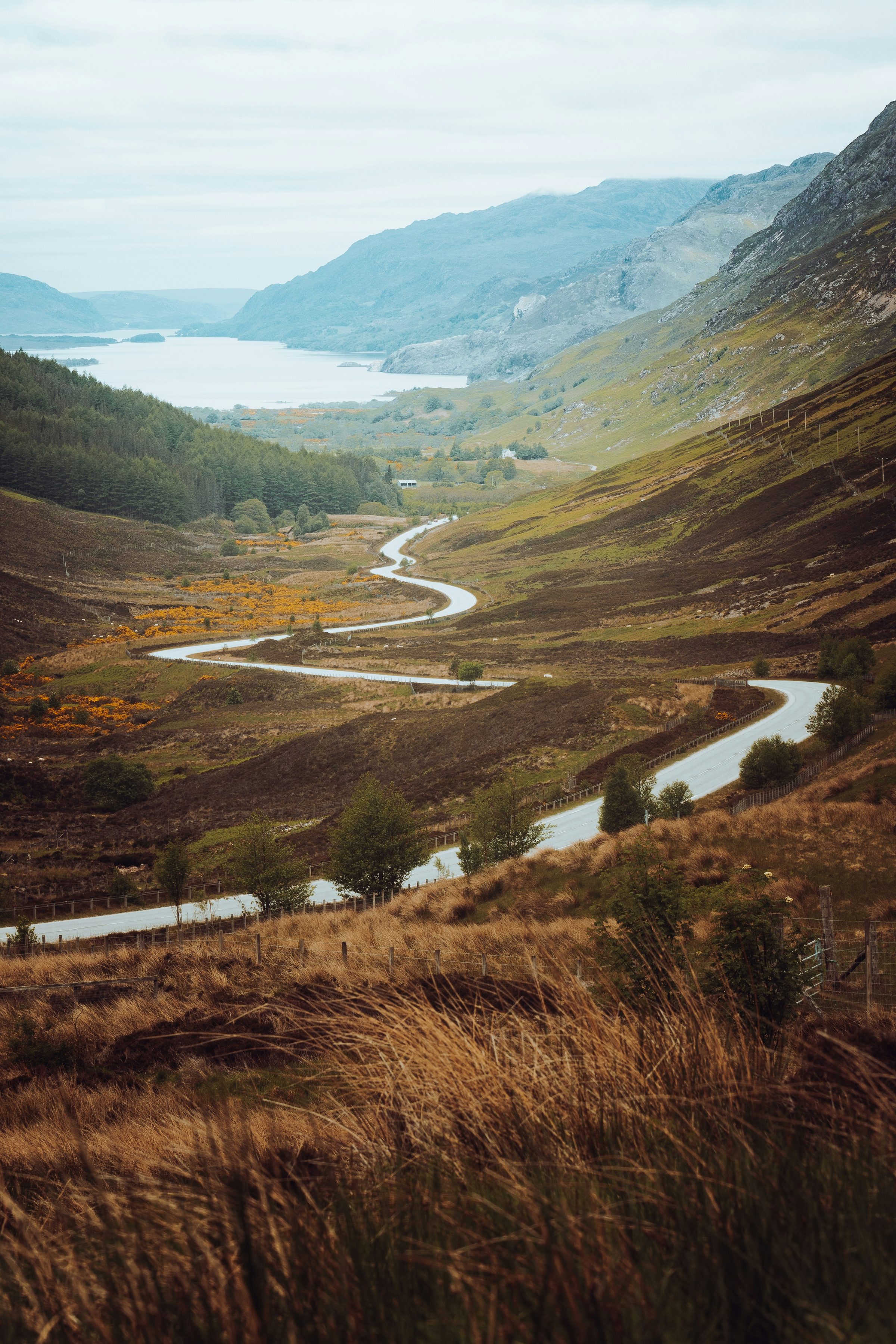
Sutherland (Cataibh) is, by Britain's standards, almost empty. The historic county covers more than 5,000 km² but holds fewer than 14,000 people; the road network is a single coastal strip on the west and north and a single trunk road on the east. Between the two coasts is a vast peat-and-hill landscape that holds Suilven, Quinag, Foinaven and Cranstackie — standalone island-mountains rising from peat platforms, instantly recognisable and unlike anything else in Scotland.
Getting there
The standard route is the NC500 from Inverness — Wester Ross gives way to Sutherland around Ullapool or Lochinver. By rail: the Far North Line from Inverness reaches Lairg, Helmsdale, Wick and Thurso on the east; the west and north have no rail service. Fuel discipline matters: the longest gap between fuel stations on the north-west arc is over 60 km (Lochinver to Kinlochbervie or Durness), so fill at every opportunity in summer.
When to go
April to October is the working window for almost everything beyond the trunk road. Many small businesses close from November to mid-March. The roads stay open year-round but winter conditions on the high passes can be impassable. Midges peak in July and August on still moorland evenings — bring repellent and a head-net for wild camping. Late May and September give the best balance of long days, settled weather and low midge.
Destinations
Trails through this region
Plan your trip
Take the printed map with you.
Full-colour, OS-grade fold-out maps cover Scotland region by region — free where you travel, the same ones you've found at ferry ports and visitor centres for over 20 years.
The visitor draw is the north-west arc: Lochinver as the food-and-galleries hub (Achins bookshop, Lochinver Larder pies, the Caberfeidh restaurant), Achmelvich and Stoer for white-shell-sand beaches, Stoer Lighthouse and the Old Man of Stoer for the headland walk, Scourie and Handa Island for the seabird colonies, Kinlochbervie and Sandwood Bay for the wildest beach on the British mainland, and Durness for Smoo Cave and the mainland-side approach to Cape Wrath. Cape Wrath itself is reached by the small passenger ferry across the Kyle of Durness followed by a 16-km minibus run through the MOD bombing range to the lighthouse — a half-day excursion on a clear day.
The east coast is gentler and lower: Helmsdale, Brora, Dornoch (across the firth — administratively Sutherland, but visitor-mentally part of the Easter Ross / Moray strip). For NC500 routing this stretch is usually the final day back into Inverness.
Good to know
- Sutherland has the lowest population density of any administrative area in the British Isles.
- Sandwood Bay near Kinlochbervie is the wildest beach on the British mainland, reached only on foot.
- Cape Wrath is reached by a passenger ferry and a minibus run through an MOD bombing range.
Frequently asked questions
Do I need to worry about fuel on the NC500 in Sutherland?
Yes. The longest gap between fuel stations on the north-west arc is over 60 km (Lochinver to Kinlochbervie or Durness). Fill up at every opportunity in summer, when motorhome demand can empty the pumps.
How do I get to Cape Wrath?
From Durness, take the small passenger ferry across the Kyle of Durness, then the connecting minibus for the 16 km run to the lighthouse through the MOD range. It's a half-day trip, weather and range-firing permitting.
When are businesses open in Sutherland?
Most galleries, cafes and smaller B&Bs run April to October and close from November to mid-March. Late May and September give the best balance of long days, settled weather and few midges.